
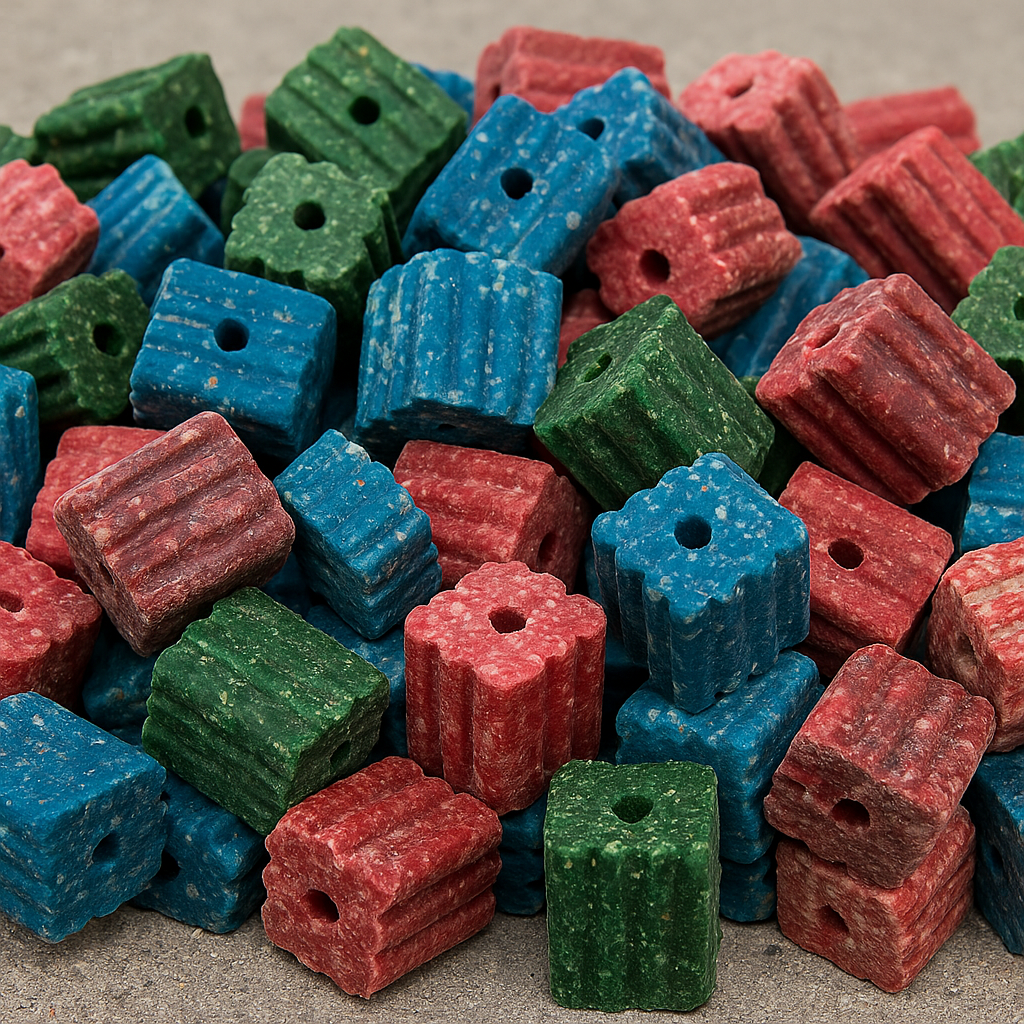
Rat and mouse baits come in several formats: blocks, chunx, soft bait and pellets (including place packs). The format matters as much as the active ingredient: it affects how well rodents accept the bait, how it holds up outdoors, and, in Canada, whether a homeowner is allowed to use it at all.
Quick comparison
| Format | Best for | Weather resistance | Homeowner (domestic) use in Canada |
|---|---|---|---|
| Bait blocks | Perimeters, garages, barns, stations on rods | Good | Allowed when the product is domestic-class and sold with a bait station |
| Chunx | Heavy pressure, rodents that like to gnaw | Good (all-weather formulas) | Allowed when the product is domestic-class and sold with a bait station |
| Soft bait | Sites with lots of competing food | Lower than blocks | Typically commercial or agricultural labels; check the label |
| Pellets and place packs | Burrows and hard-to-reach spots, under label conditions | Low | Not allowed: domestic products must be block or solid |
Bait blocks
Blocks are firm, usually wax-based baits with a hole that locks onto the rod inside a bait station. They stay in place, resist moisture and make consumption easy to monitor. See rodent bait blocks in Canada.
Chunx
Chunx are smaller solid pieces with many edges for gnawing, which rodents often accept well. All-weather chunx such as Tomcat, Hawk and Jaguar are popular for barns and building perimeters.
Soft bait
Soft baits are paste-like sachets with a high food content. They are very palatable, which helps where rodents have grain, feed or garbage to choose from. They hold up less well outdoors than blocks. See soft bait rodenticides.
Pellets and place packs
Pellets can be placed in burrows and tight spaces, often in pre-measured place packs. Health Canada does not allow loose formulations such as pellets, meal, treated grain or liquids in domestic-class products, so pellet products are for commercial or agricultural users, under the label's conditions.
Whatever the format: use a bait station
Domestic products must always be used in bait stations, and outdoor commercial or agricultural bait above ground must also be in stations, tamper-resistant wherever children, pets, livestock or wildlife could reach it. Browse rat bait stations and mouse bait stations.
Next: compare active ingredients in our rodenticide ingredient guide, or read the rat poison in Canada guide.
Frequently asked questions
Can homeowners buy rodenticide pellets in Canada?
No. Health Canada allows only block or solid formulations in domestic-class products, and they must be sold with a bait station. Pellets, meal, treated grain and liquids are not allowed for domestic use.
Which bait format works best outdoors?
Weather-resistant blocks and all-weather chunx placed in secured bait stations hold up best to rain, snow and humidity.
When should I use soft bait?
Soft baits are very palatable and are often used where rodents have plenty of other food, such as farms and food facilities, under a commercial or agricultural label.
What is the difference between blocks and chunx?
Both are solid baits. Blocks are usually larger and moulded with a hole for the station's rod; chunx are smaller pieces designed to give rodents more gnawing edges. The label sets how much to place per station.
This guide is general information, not legal advice. The product label is the law: always read it before buying or using a rodenticide, and check provincial rules. Sources: Health Canada: additional mitigation measures for rodenticides; Health Canada pesticide label search.
Share:
Brodifacoum vs Bromadiolone vs Difethialone: Rodenticide Ingredients Compared (Canada)