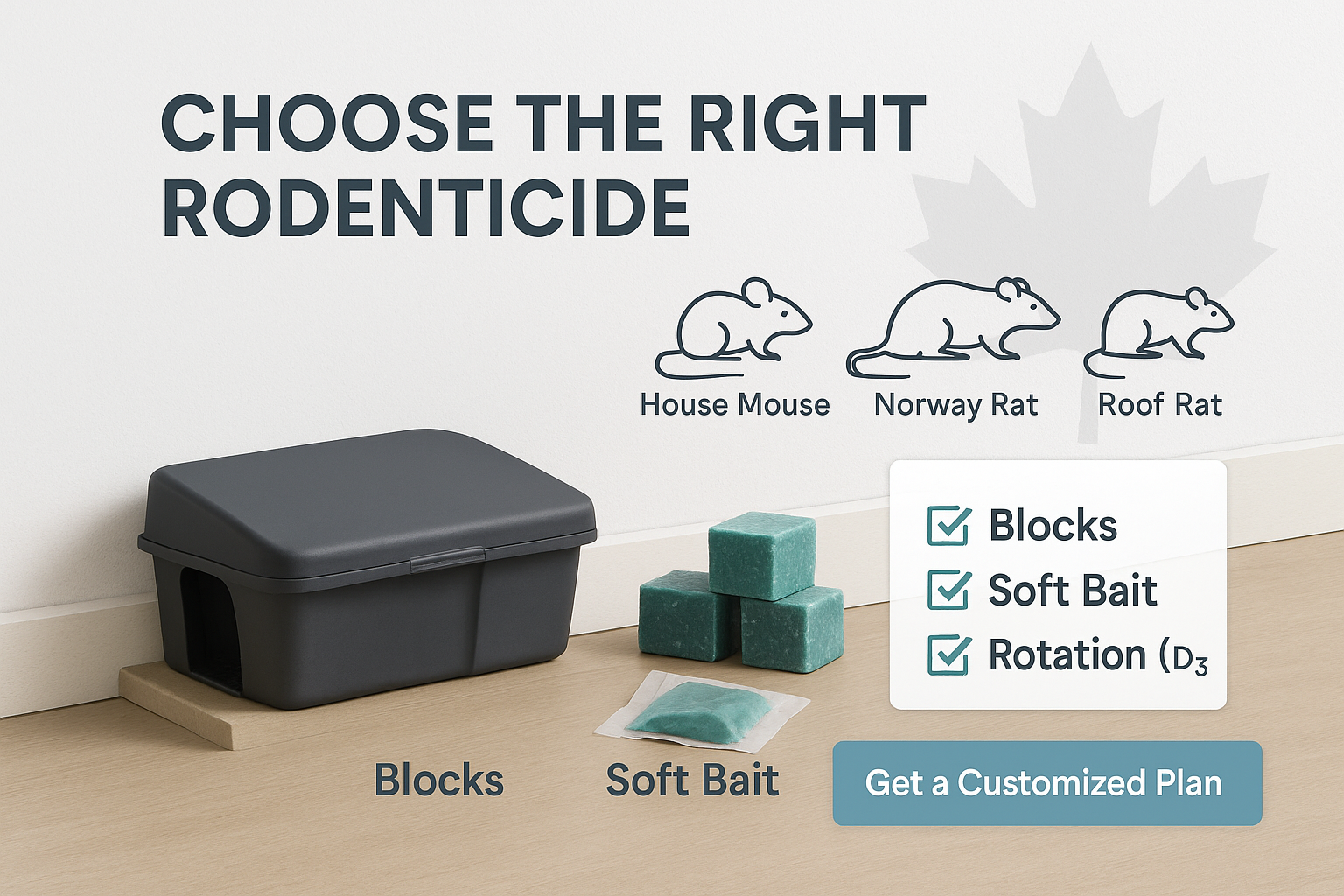
Choose a rodent-control plan for the building before choosing a bait. Identify the problem, repair access points, manage food and waste, and consider suitable traps. If a pesticide is needed, match the exact Canadian label to the intended user, pest and location.
Updated October 21, 2026 · Prepared by Rodenticide Canada. Sources and review scope are listed below.
What changes between a home, a farm and a food facility?
| Setting | Start here | Before using a pesticide |
|---|---|---|
| Home or cottage | Check doors, utility openings, food storage and signs of activity. Consider traps designed for the identified rodent. | Confirm that the product permits your intended user and residential use site. A commercial product is not automatically suitable for a homeowner. |
| Farm building | Record the affected building, feed-storage issues and access by livestock, pets or wildlife. | Check the specific agricultural structures and placements on the label, plus applicable local requirements. |
| Food facility | Work with the person responsible for the site's pest-control programme and food safety procedures. | Review food-contamination risks, permitted locations, monitoring and records. A product used in a barn is not automatically permitted in a food-processing area. |
1. Make a short inspection record
Record the location and date of observations, including damaged packaging, gnaw marks or sightings. Assign repairs and a follow-up date. Our rodent-prevention inspection checklist provides a reusable action log.
For homes, Health Canada recommends prevention measures such as closing entry points, securing food and waste, and reducing shelter. Follow the instructions for the chosen trap and check traps daily. Avoid sweeping or vacuuming dry droppings; consult the linked cleanup guidance.
2. Identify the exact Canadian product
Record the product name, registration number, active ingredient, formulation and package size. Use Health Canada's label search to locate the Canadian label and match it to the container. A safety data sheet provides hazard information; it does not replace the use directions.
Our Tomcat, Hawk, Jaguar and Rampage comparison links Canadian manufacturer references. It is a document-based comparison, not a recommendation that every formulation is suitable for every property. Ingredient strength or a “single-feed” description cannot determine a site's permitted use.
3. Confirm user eligibility and station requirements
Health Canada's commercial rodenticide guidance identifies certified pest control operators, farmers and people authorized under government-approved pest-control programmes as permitted user groups. Read the exact label and check the additional rules in your province or municipality.
Station requirements depend on placement and potential access by children, pets, livestock and wildlife. Check the station's specifications against the label. A tamper-resistant station reduces access to bait; it does not make the pesticide harmless or expand its permitted uses.
4. Add food-safety controls for food facilities
The Canadian Food Inspection Agency's pest-control guidance addresses building maintenance, monitoring, control methods and records. It prioritizes traps inside establishments, especially processing areas, and describes additional conditions where bait is required. Do not treat a general product recommendation as approval for use near food.
Have the responsible person document the areas covered, equipment locations, who carries out each task, inspection frequency and corrective actions. Record results and review whether controls are working. The facility's programme must address its own operations and applicable requirements.
Questions to ask before ordering
- Which Canadian registration number applies to this exact package?
- Does its current label permit the intended user, pest and building?
- Which station specifications and accessories must be confirmed?
- What is included in the package, and what is purchased separately?
Use the buying guide, review our Canadian label resources, or request product documents. Include your province, property type and the product link.
Sources and review scope
Reviewed October 21, 2026 using the Health Canada and CFIA resources linked above. This article is a planning guide, not a pesticide application instruction or a comparative product trial. The current label and the requirements applicable to your activity govern pesticide use.
Share:
Tomcat vs Hawk vs Jaguar vs Rampage: Canadian Bait Guide
Fall Rodent Prevention in Canada: A Before-Winter Checklist